From beach espeto to Michelin stars — the flavours of the coast
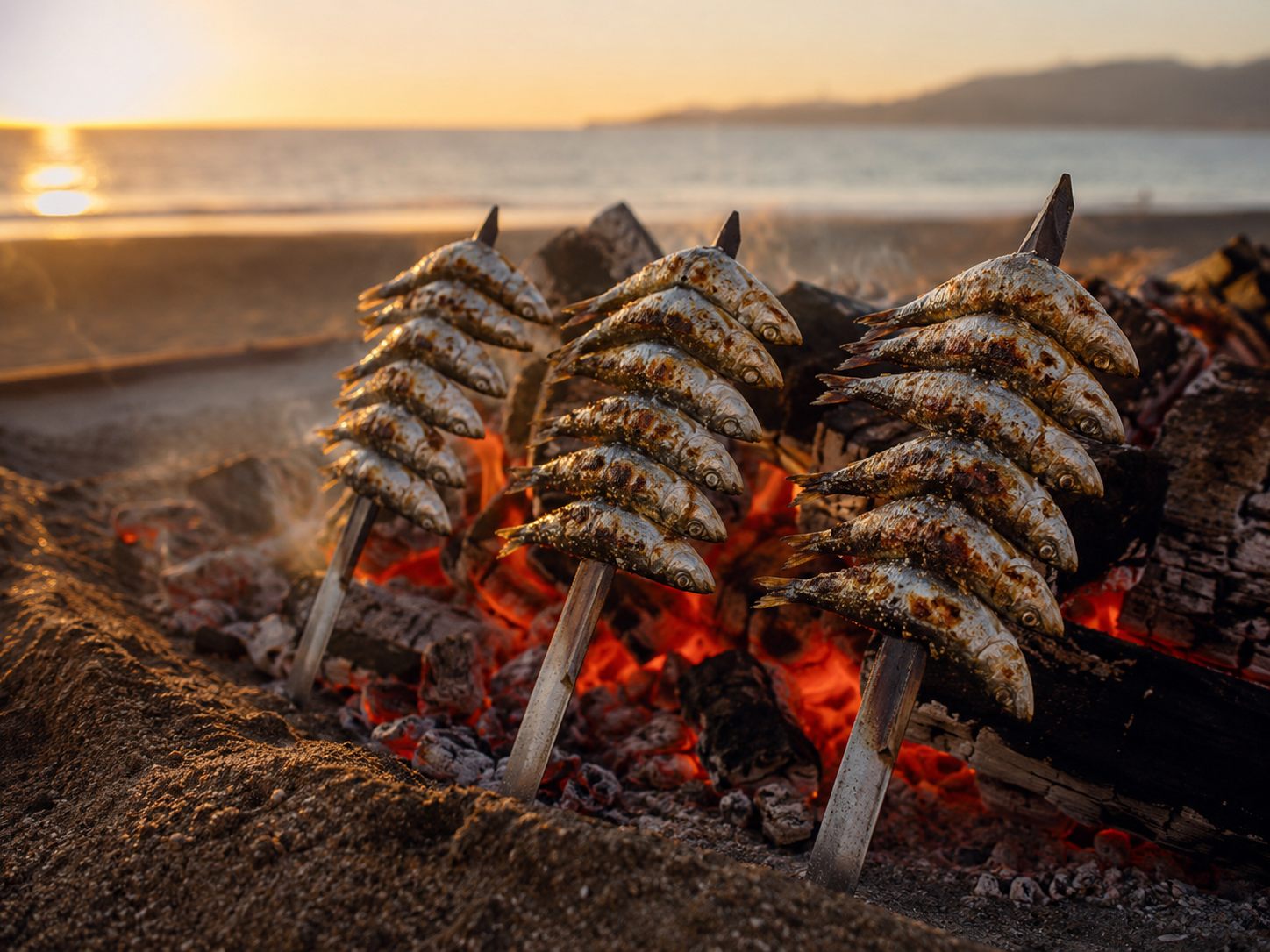
If you want to understand the Costa del Sol, don’t start with the museums. Start with the sardines. Six silver fish on a cane skewer, planted in the sand over a driftwood fire — that is espeto, a dish so simple it borders on insolence. And so good I find myself thinking about it in the middle of a Polish winter.
Espeto: theatre of a single fire
The espetero — the man at the fire — is a real profession on Málaga’s beaches, with its own hierarchy and pride. The fire burns in an old boat filled with sand, the skewers go in at a precise angle to the wind, and the moment to pull the fish off the embers is a matter of instinct no book can teach. You eat with your fingers, a squeeze of lemon, a piece of bread, something cold in the glass. The best months are the ones without an "r" — May to August, when the sardines are at their fattest.
Malagueños love the story from 1885, when King Alfonso XII visited the city and was offered an espeto on the beach. The king reportedly reached for cutlery, at which the espetero is said to have told him: "Your Majesty, sardines are eaten with the fingers." I don’t know how much of it is true. I do know the rule still stands and admits no exceptions — not even for kings.
Atarazanas: a market you’ll want to live next to
Málaga’s main market occupies a nineteenth-century hall with a stained-glass window the size of a townhouse and a gate dating back to the Moorish shipyards. In the morning you buy fish whose names appear in no dictionary, honestly priced fruit, and ham sliced before your eyes into sheets thin as paper. By noon the market melts into a tapas bar: at a marble counter you eat what was lying on ice an hour earlier. If you have guests on the coast and only one free morning — bring them here.
A practical tip: go before ten, bring a cloth bag, and buy wherever the queue of locals is longest. The stallholders will happily tell you what to take and how to cook it — my favourite fishmonger dictates recipes at machine-gun speed and refuses to accept that anyone might not have garlic at home.
Menú del día, Spain’s best bargain
The daily ritual of working Spain: three courses, bread, a drink, sometimes coffee — all for a dozen or so euros. This is not "tourist food"; it is real food: gazpacho or lentils to start, pan-fried fish or stewed beef, flan to finish. You recognise a good menú del día by the fact that at 2:30 pm there is not a free table and the clientele wears work clothes. Look two streets back from the sea — on the front line you pay for the view.
Sunday belongs to paella
There is one more ritual worth knowing: Sunday lunch at a chiringuito. Around two o’clock the families begin to arrive — three generations at pushed-together tables, children running between sunloungers, huge flat pans of paella and rice in a thousand variations. Nobody is in a hurry; a lunch like this ends closer to sunset than to teatime. The first time our Spanish neighbours invited us to such a Sunday, I made the beginner’s mistake: I ate too many starters. Don’t — the paella only comes third.
Marbella and the star league
At the other end of the scale is Marbella, which grew from a quiet fishing village into one of Europe’s more interesting culinary addresses. Michelin-starred rooms, author’s cuisine splicing Andalusia with the wider world, tables booked a month ahead. The interesting part: the great chefs cook with the same produce as the espetero on the beach — prawns from Garrucha, tuna from Barbate, olive oil from the hills behind town. The difference lies in what they do with it, and what they charge.
How to eat like a local
One practical tip: reset your clock. Lunch is at 2–3 pm, dinner starts at 9 and nobody finds that late. A restaurant empty at 7:30 pm is not suspicious — it is simply Spanish. A second tip: tapas is not a type of food, it is a way of life. You order two things, eat, talk, order more or move to the bar next door. Hurrying ruins the whole effect.
And a third, the most important: coffee after lunch means a cortado — an espresso with a splash of milk. Ordering a large milky coffee after a meal will give you away as a foreigner faster than any accent. I know, because I tested it.