Málaga: southern Europe’s new tech capital
Ten years ago, Málaga was — for most Europeans — the airport you land at on the way to Marbella. Today it is a city where Google opened an engineering centre and where you overhear as many conversations about code as about football. This is no accident — and if you are thinking about a home on the coast, this change concerns you too.
It all began with four people and an antivirus
Few people know that the roots of Málaga’s boom lie in a small local startup. VirusTotal — a service that analyses suspicious files, today one of the largest threat databases in the world — was founded in Málaga in 2004. Eight years later Google bought it and, instead of moving the team to California, left it where it was. It was the best advertisement the city could have wished for: if Google engineers can work with a view of the Mediterranean, why not everyone else?
The sequel wrote itself. In 2023 Google opened its European digital-safety engineering centre in a restored building on Paseo de la Farola, between the port and Malagueta beach — its third on the continent, after Dublin and Munich. Others followed: Vodafone with an R&D hub, banks, consultancies, Japan’s TDK. And on the edge of the city, all this time, the Málaga TechPark kept growing — today more than seven hundred companies and close to thirty thousand jobs, a third of the city’s economy.
Then came the nomads
Alongside the corporations came a second wave: people with laptops. For digital nomads Málaga turned out to be close to ideal — fast internet, an airport with direct flights to half of Europe, a climate in which remote work stops feeling like a punishment, and a time zone convenient for European teams. In rankings of the best cities for foreign residents, Málaga regularly lands on the podium. You can see the effect in the cafés: at every other table someone sits in headphones on a video call.
What it did to the city
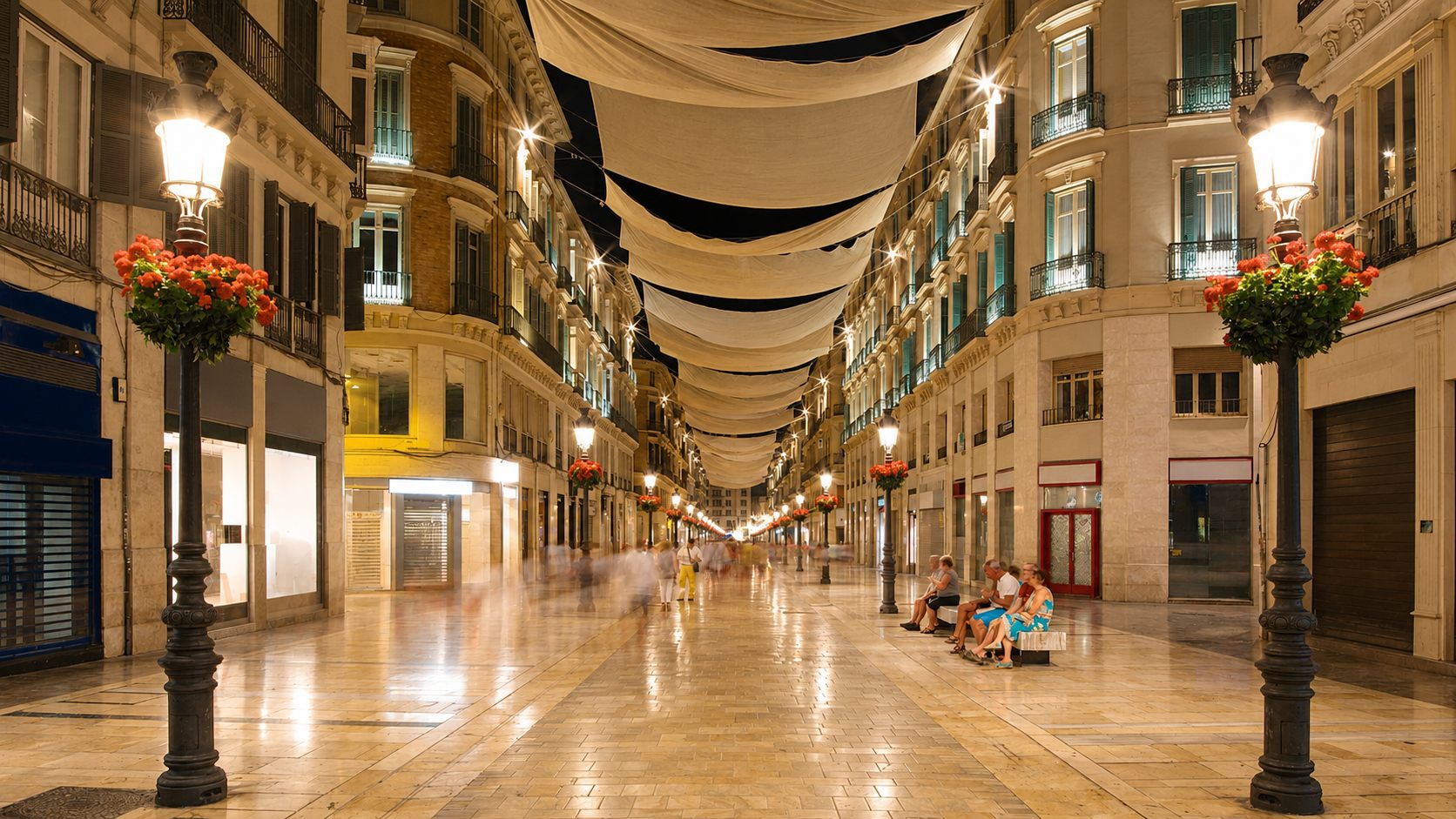
Málaga was always beautiful — now it is alive in a new way. The centre has filled with coworking spaces, cafés that speculate about bean provenance, and international schools with waiting lists. Soho, until recently a fading district by the port, has become a quarter of galleries and murals. The city is getting younger: the average age at the tables on Calle Larios has dropped, by eye, a decade.
There are shadows too, no point pretending otherwise. Residents complain about rising rents and a centre that increasingly belongs to newcomers. Every city that suddenly became fashionable knows this tension — from Lisbon to Barcelona.
What it means for the property market
For an apartment owner, the tech boom means one thing above all: a new kind of tenant. An engineer on a two-year contract, a family relocated by a corporation, a nomad staying six months — people who look for medium- and long-term lets, pay steadily and do not vanish in September like tourists. Málaga’s rental market has stopped being seasonal, and that changes the sums: fewer empty months, less turnover, a steadier return.
Clients of ours, a couple from Wrocław, bought a flat two years ago with holiday lets in mind. After six months of juggling bookings they rented it to a TechPark engineer on a two-year contract. Less income at peak season, they admit — but zero empty weeks, zero cleaning every three days, and the rent on their account on the first of the month. Only now, they say, is the investment genuinely hands-off, not just in the listing.
Prices in the city itself have risen faster in recent years than on most of the coast, and cheap it is not. But the demand driving them is not a fashion: behind it stand companies, universities, the airport and the port. Things like that do not leave after the holidays.
Where to look if Málaga tempts you
The centre itself is beautiful and expensive. It gets more interesting one step out — east towards Pedregalejo and El Palo, where the city meets the beach and the old fishermen’s houses, or west along the metro line towards the TechPark. The satellite towns are worth watching too: Rincón de la Victoria and Torremolinos, connected to the centre by suburban rail, catch Málaga’s wave at a lower entry price. As for choosing specifically — that is a conversation we have one on one. It is what we are here for.