
Character
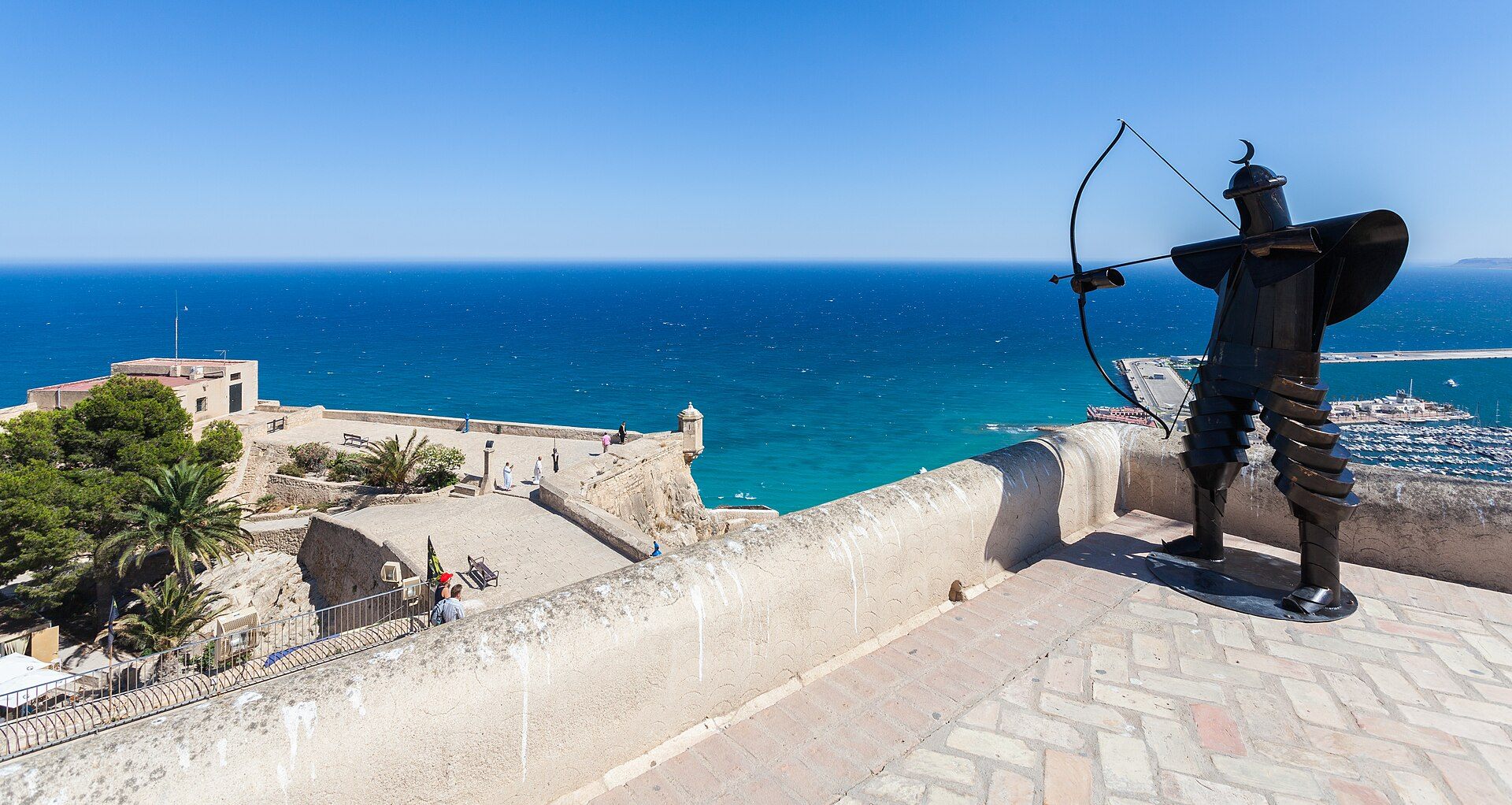
Alicante is the odd one out on this list, because it is the only place here that would look exactly the same if tourists never came. Three hundred and thirty thousand residents, a university, a commercial port, courts, hospitals, offices — and on top of all that, a beach you reach from the centre in ten minutes. The Santa Bárbara castle stands above the city on the rock of Benacantil, and from its foot runs the Explanada de España: a promenade paved with six million marble tiles in a wave pattern, walked by the entire city at once at nine in the evening. When clients tell me they want Spain rather than a Spanish resort, Alicante is usually the first stop I suggest. Sometimes they never get to the second one.
Location and access
This is the best-connected point on the whole Costa Blanca. Alicante–Elche airport is fifteen minutes from the centre and handles dozens of routes to Poland — Warsaw, Krakow, Katowice, Gdansk, Wroclaw and Poznan, most of them daily for most of the year. The railway station takes AVE high-speed trains: Madrid in 2 hours 20 minutes, Valencia in about ninety minutes. Along the coast towards Benidorm, Altea and Denia runs the TRAM, a seaside light rail you can genuinely commute on. Torrevieja is 45 minutes away, Murcia an hour. A car here is a convenience rather than a requirement: Alicante is one of the few places on this coast where you can live a normal life without one.
Everyday life
Daily life here is urban. You shop at the Mercado Central — a modernist 1921 hall where the fish sits on ice until noon, not until evening — or in the stores along Avenida de Maisonnave, the main shopping street. Breakfast is eaten out, because a tostada with tomato and a coffee cost less than making the same at home. In the evening life moves to Barrio de Santa Cruz, the district of narrow stepped alleys below the castle where geraniums hang from every wall, and to El Barrio, the old town, which after ten belongs to the students. Nothing closes out of season — and that is the difference you notice fastest after moving from a resort.
Schools and healthcare
Alicante has the densest cluster of international schools on the Costa Blanca: King's College Alicante with the British curriculum, El Limonar International School, Elian's British School in nearby Alfaz del Pi, and several private Spanish schools with bilingual streams. The University of Alicante campus in San Vicente del Raspeig is one of the largest in the country, with a wide offer of Spanish courses for foreigners. Healthcare: Hospital General Universitario Dr. Balmis is a large public hospital in the centre, plus the hospital in San Juan and several private clinics (Vithas, HLA) with English-speaking staff. For a family with children this means one thing: you do not have to choose between the school and the beach, because both are in the same city.
Leisure
Postiguet beach lies directly below the castle, with sand and full facilities, but the real reason people buy flats here is Playa de San Juan — seven kilometres of wide Blue Flag sand, a quarter of an hour from the centre by tram, with its own quieter residential district behind the dune. You reach the castle by a lift cut into the rock from the beach side; the view takes in the port, the island of Tabarca and, on a clear day, the outline of the Sierra de Aitana. Marina Alicante hosts regattas, and every few years the Ocean Race starts from here. In June the city becomes the stage for Hogueras de San Juan: giant cardboard figures burn in the streets for a week, and midsummer night ends with the whole city swimming in the sea. Tabarca — a marine reserve with a single village and excellent caldero — is an hour away by ferry from the port.
Who it suits
Alicante is chosen by people who want to live somewhere, not holiday there: remote workers, families with school-age children, retired city dwellers who cannot imagine life without a theatre, a market and a café downstairs. Prices are clearly below Marbella and still below Denia or Moraira, while the variety is enormous: townhouse flats in the centre, apartments in San Juan, new developments in Playa de San Juan and Vistahermosa. Rental works twelve months a year — students, university staff, seasonal workers and tourists overlap, so there is no dead January of the kind smaller resorts suffer. For someone buying both for their own use and for letting, it is the safest choice on the Costa Blanca.
Developments in Alicante
3 new-build developments, prices from 184,000 €
Looking for a property in Alicante?
We’ll search the full new-build database in this area and prepare a selection for your goal and budget — with no fees or commission.
Nearby towns
A colourful fishing town, authentic and year-round
A skyline over two great beaches, rentals all year
New developments with sea and Puig Campana views
Editorial content — travel times and facilities are confirmed individually. Not advice.