Character
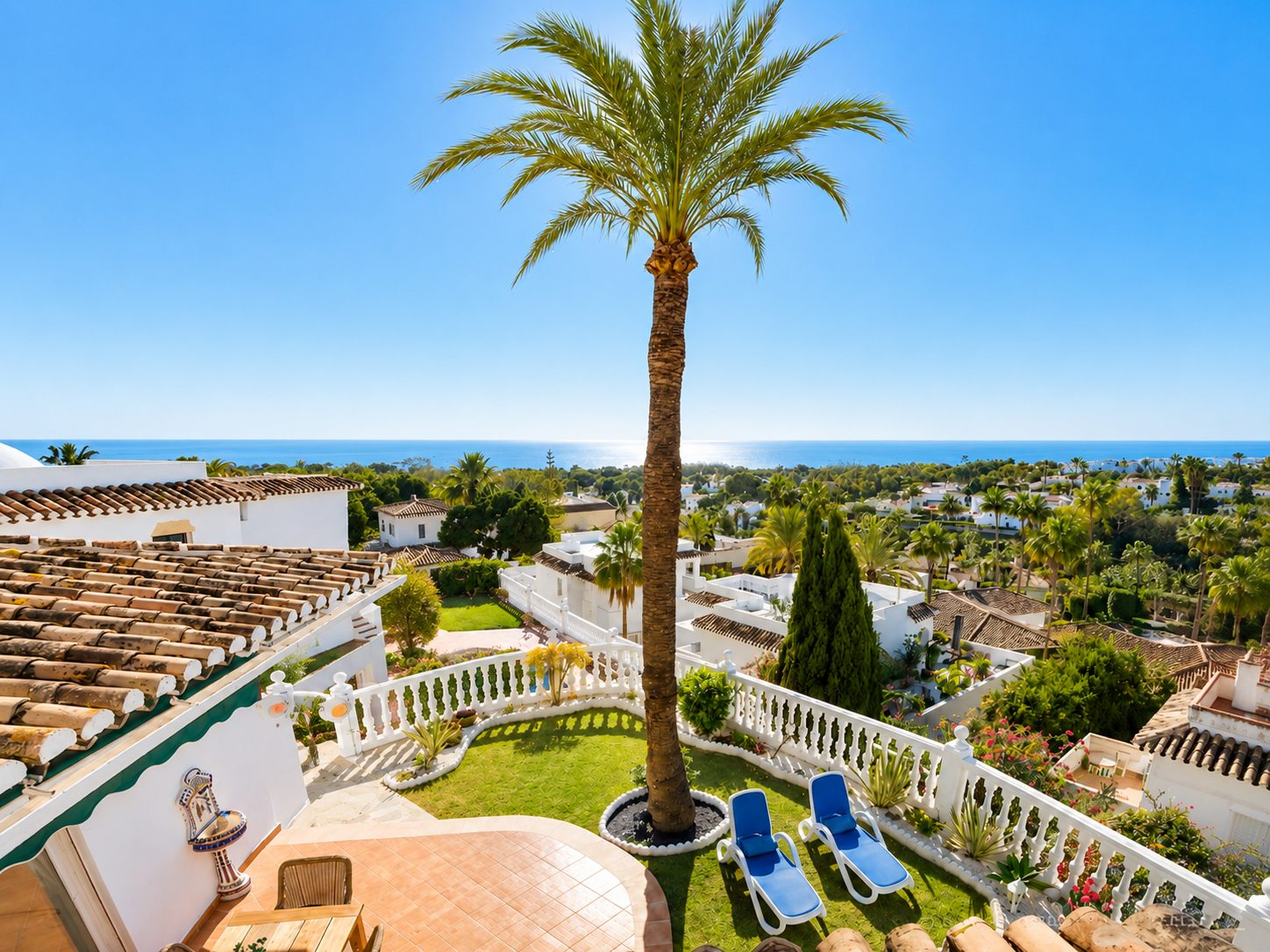
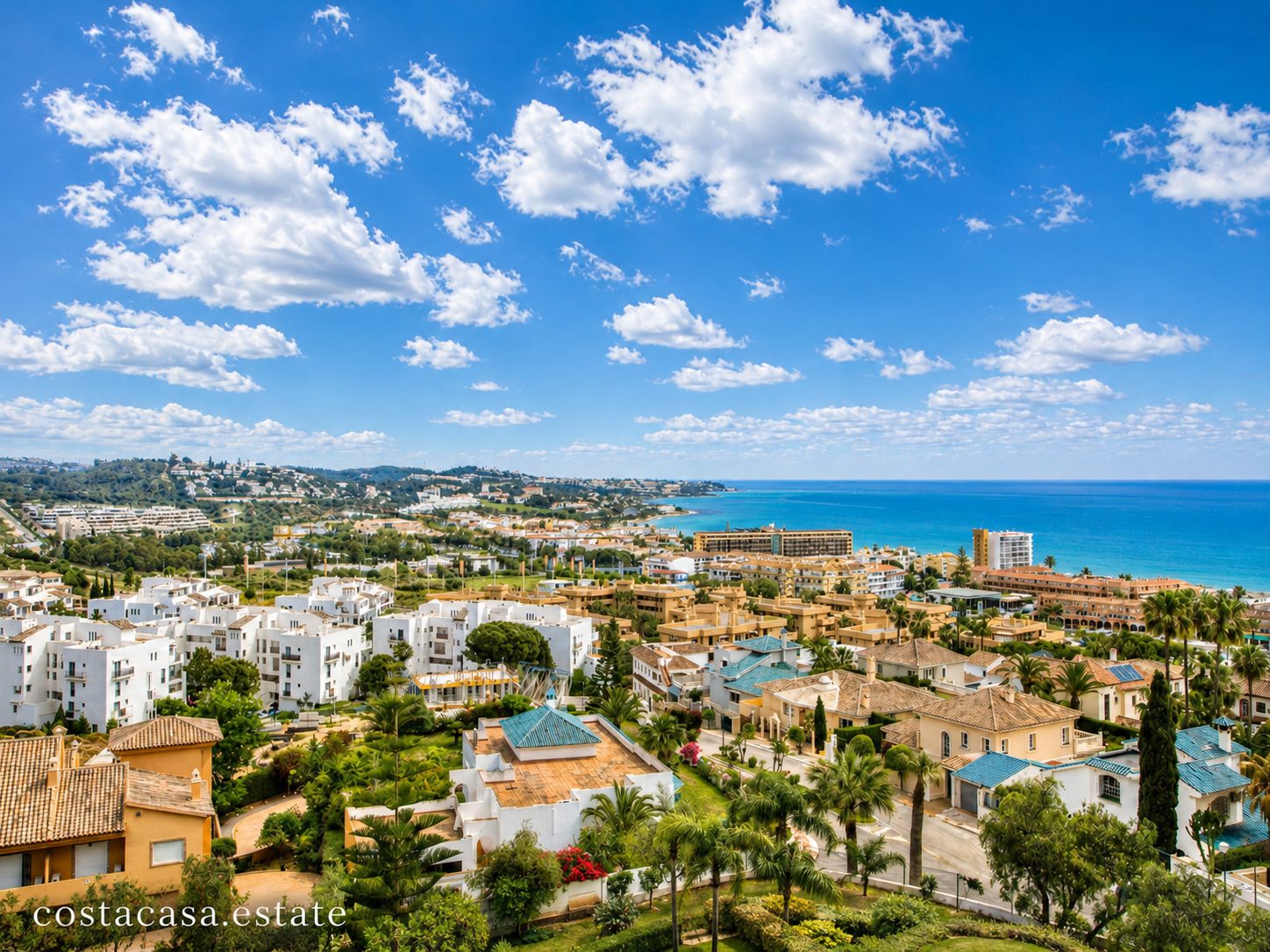
Mijas is really two different addresses under one name. Higher up, four hundred metres above the sea, sits the pueblo: a white village with donkey taxis, lanes wide enough for one pedestrian, and a viewpoint that on a clear day takes in the whole bay as far as Gibraltar. Below stretches Mijas Costa with La Cala — a low-rise shoreline of golf courses and new developments, noticeably calmer than neighbouring Fuengirola. Clients usually come to see one and buy in the other; I show both, because only together do they explain why this municipality has been the fastest-growing part of the mid-coast for years.
Location and access
The middle of the Costa del Sol and probably the best transport compromise on it: 25 minutes to the airport, 20 to Marbella, 10 to Fuengirola where the commuter train line ends. The A-7 crosses the municipality, so everything is close by car, and in La Cala plenty can be done on foot. The pueblo is reached by a switchback road — fifteen minutes uphill and suddenly you are somewhere else. In winter, remember it is a few degrees cooler up there, and in the evening you feel every one of them.
Everyday life
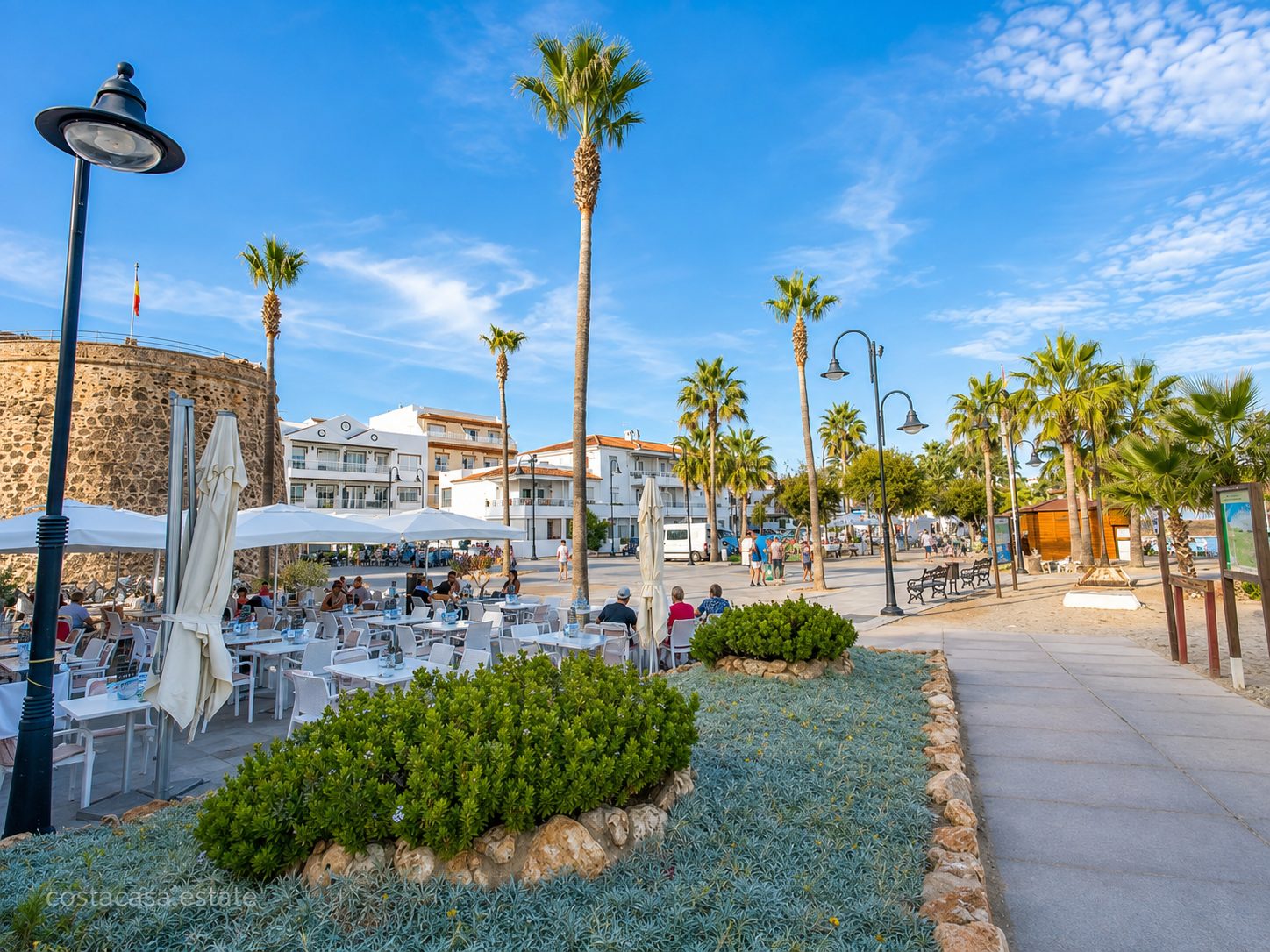
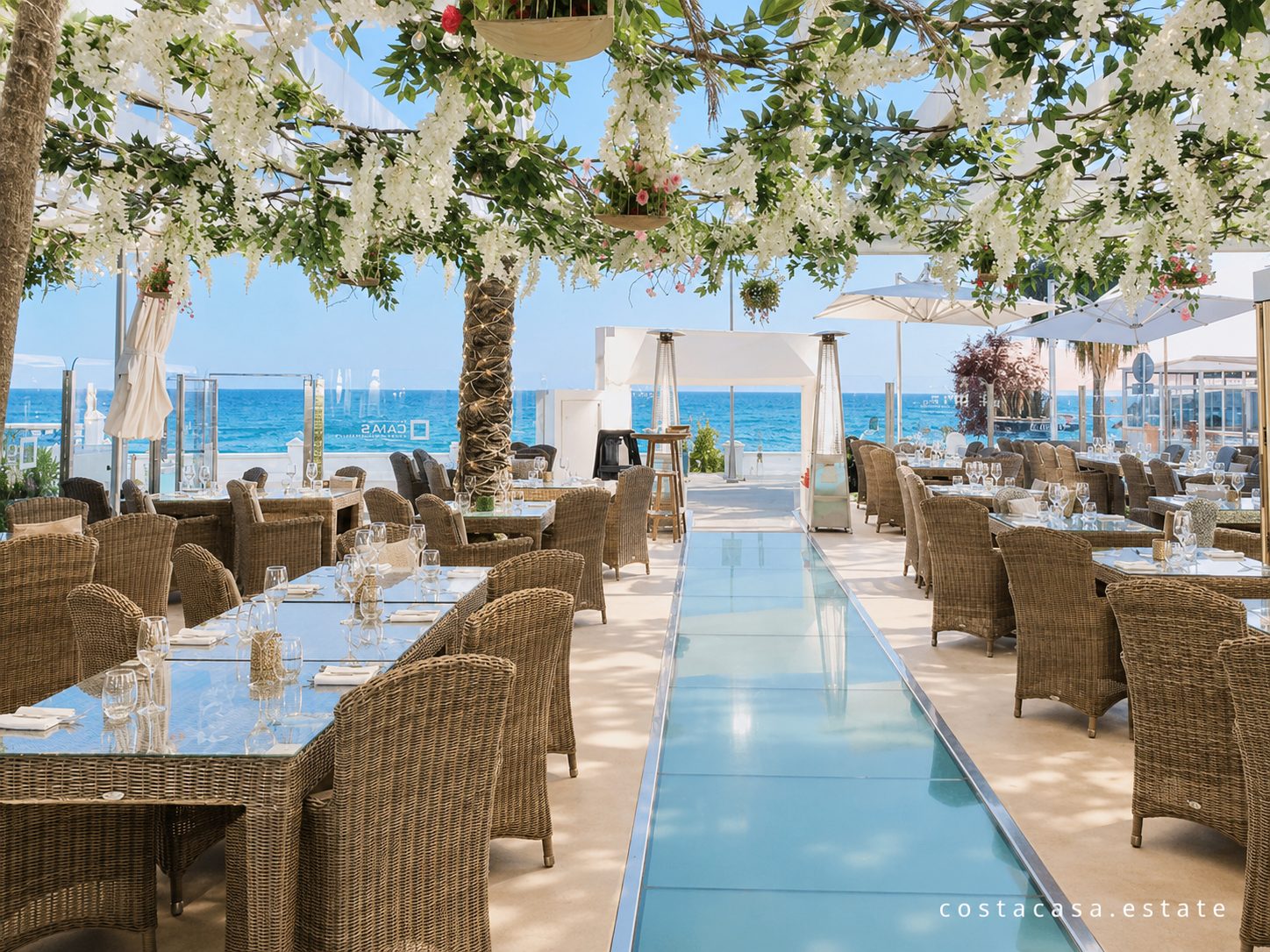
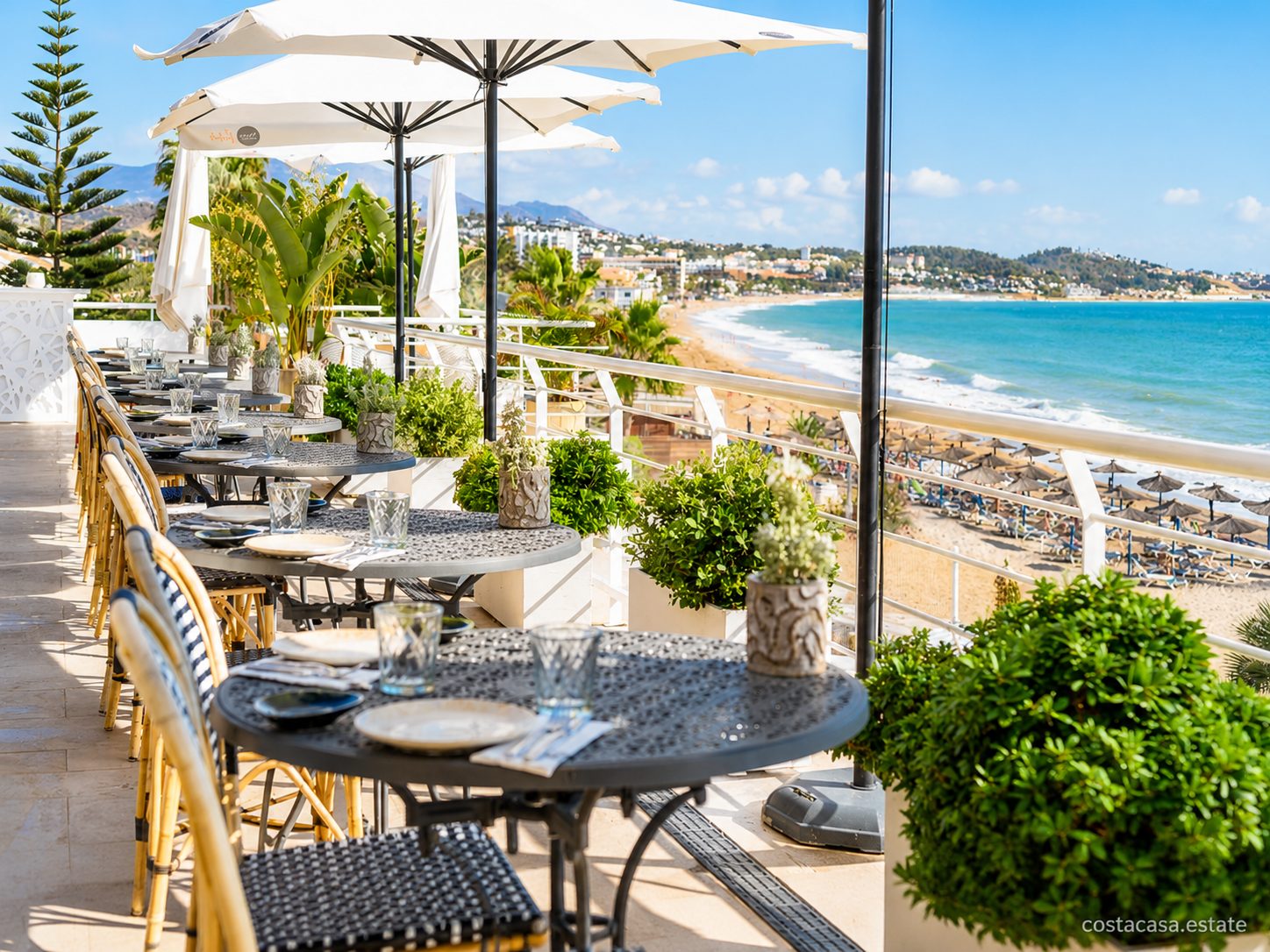
La Cala de Mijas has grown from a sleepy fishing village into a self-sufficient town: Tuesday market, supermarkets, a health centre, gyms, dozens of beachfront restaurants and enough places that stay open in January. The community is thoroughly international — British, Scandinavian, increasingly Polish — and the daily rhythm calmer than in the towns either side. In the pueblo, life revolves around the square and the coach tourists who come for a few hours; once they leave around seven, the village belongs to its residents again. That is one of my favourite moments on the whole coast.
Schools and healthcare
There are public schools in the municipality, and the international ones are next door — Finnish and Norwegian in Fuengirola, British and IB in Marbella, all within 15 to 25 minutes. Health centres are local, in La Cala and Las Lagunas. The public Costa del Sol hospital sits by the motorway on the way to Marbella, the private Quirónsalud in Fuengirola — a quarter of an hour either way. For families this municipality is often the compromise: home in a quiet spot, school somewhere else.
Leisure
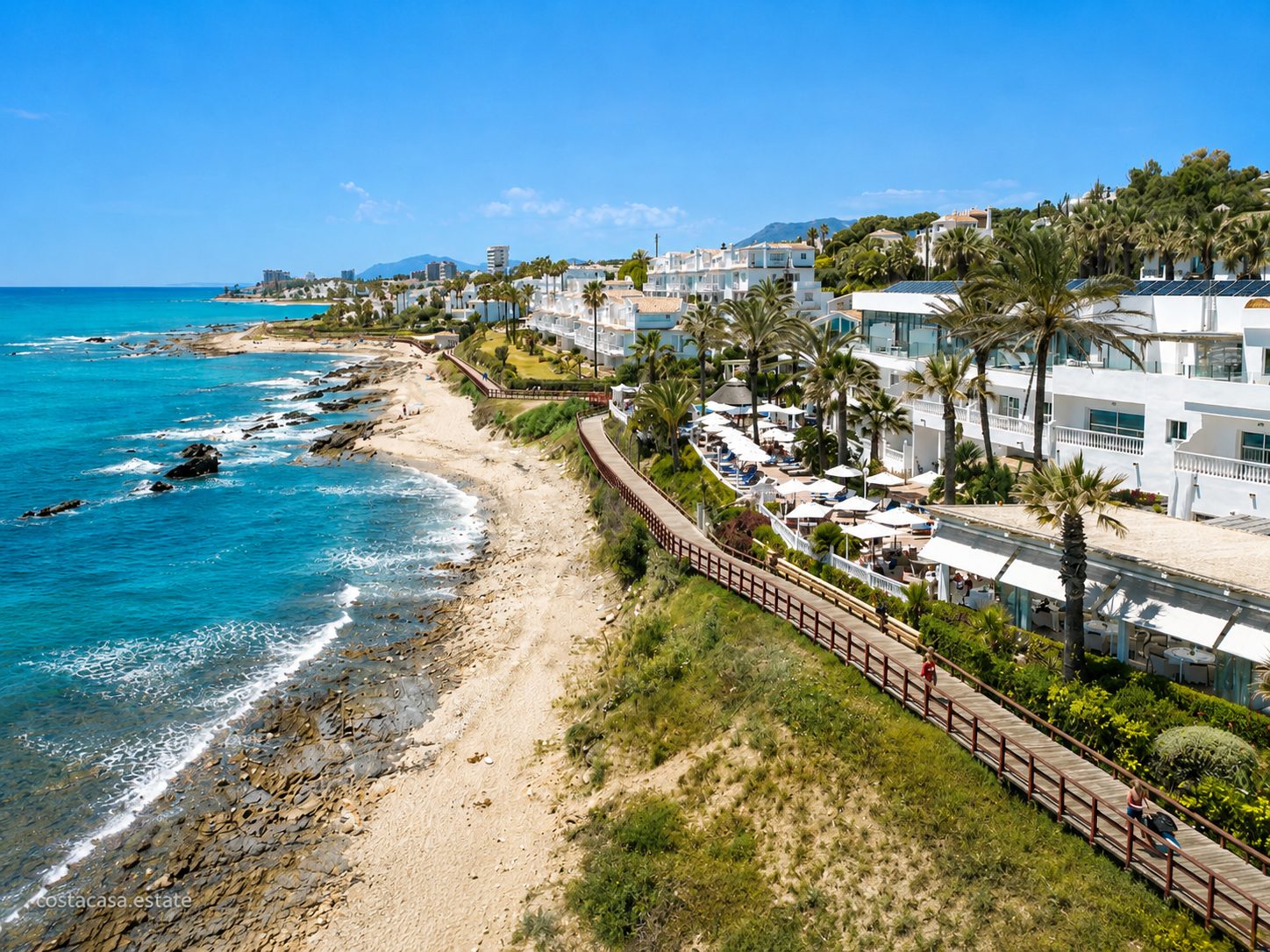
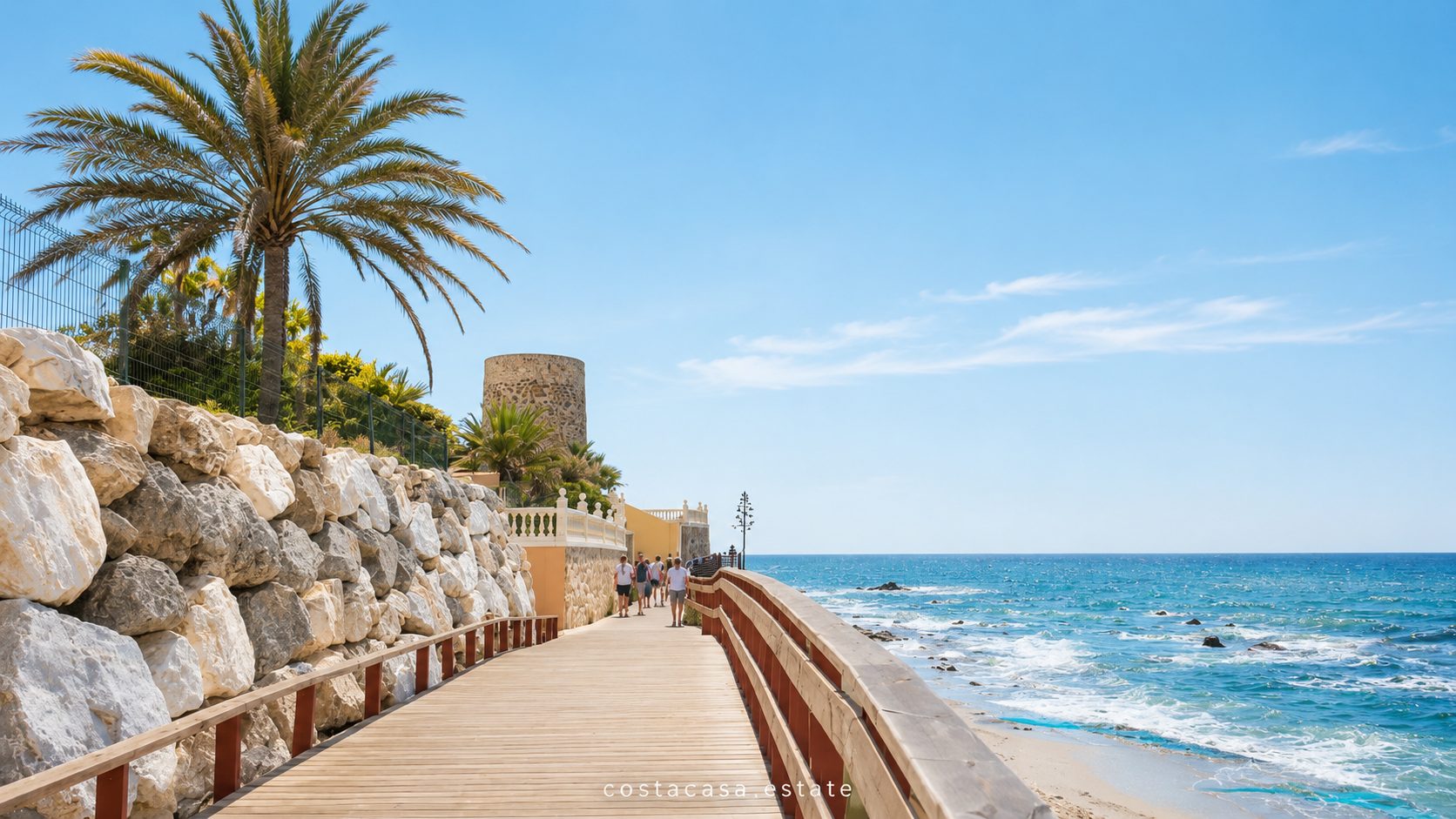
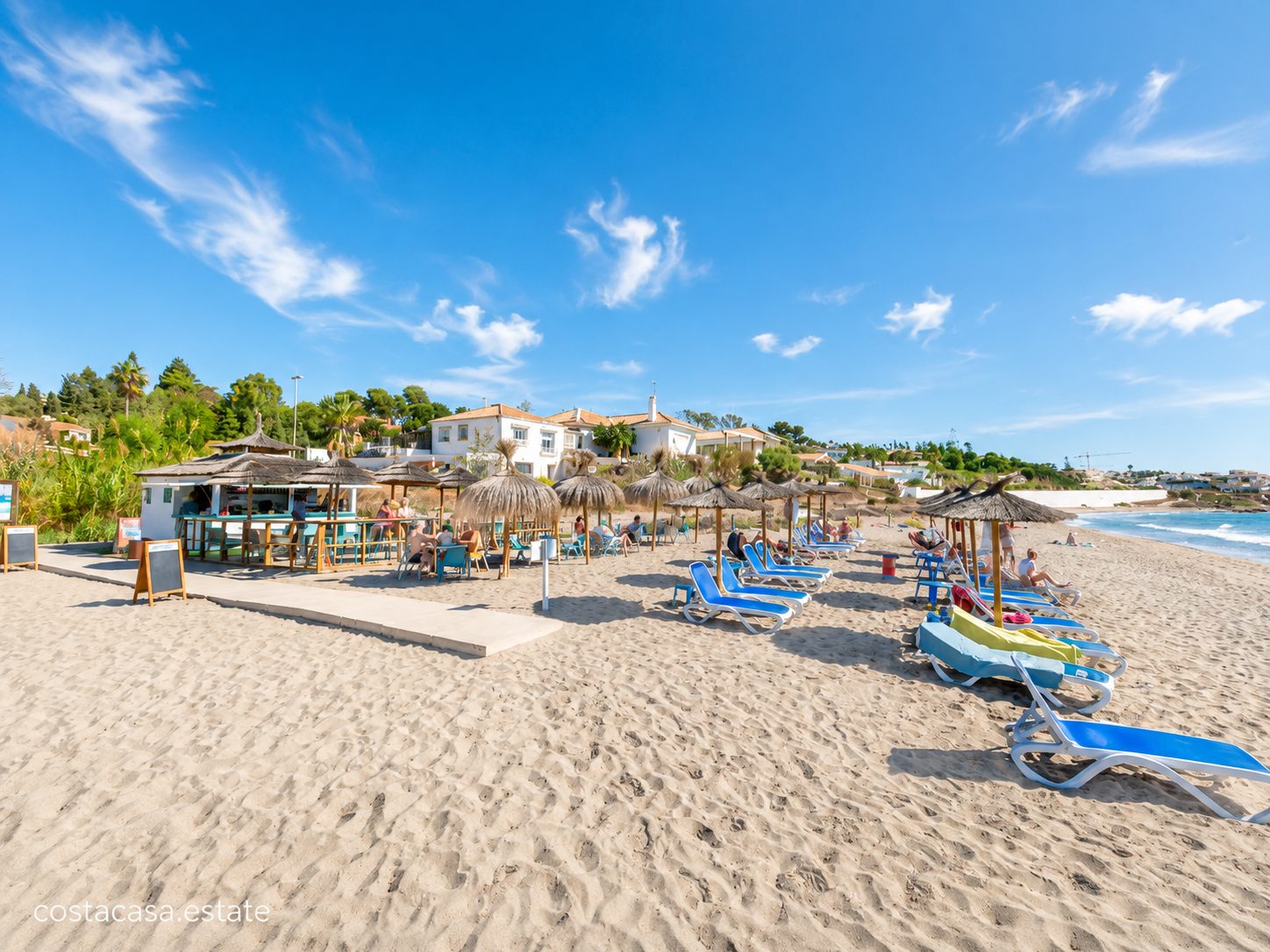
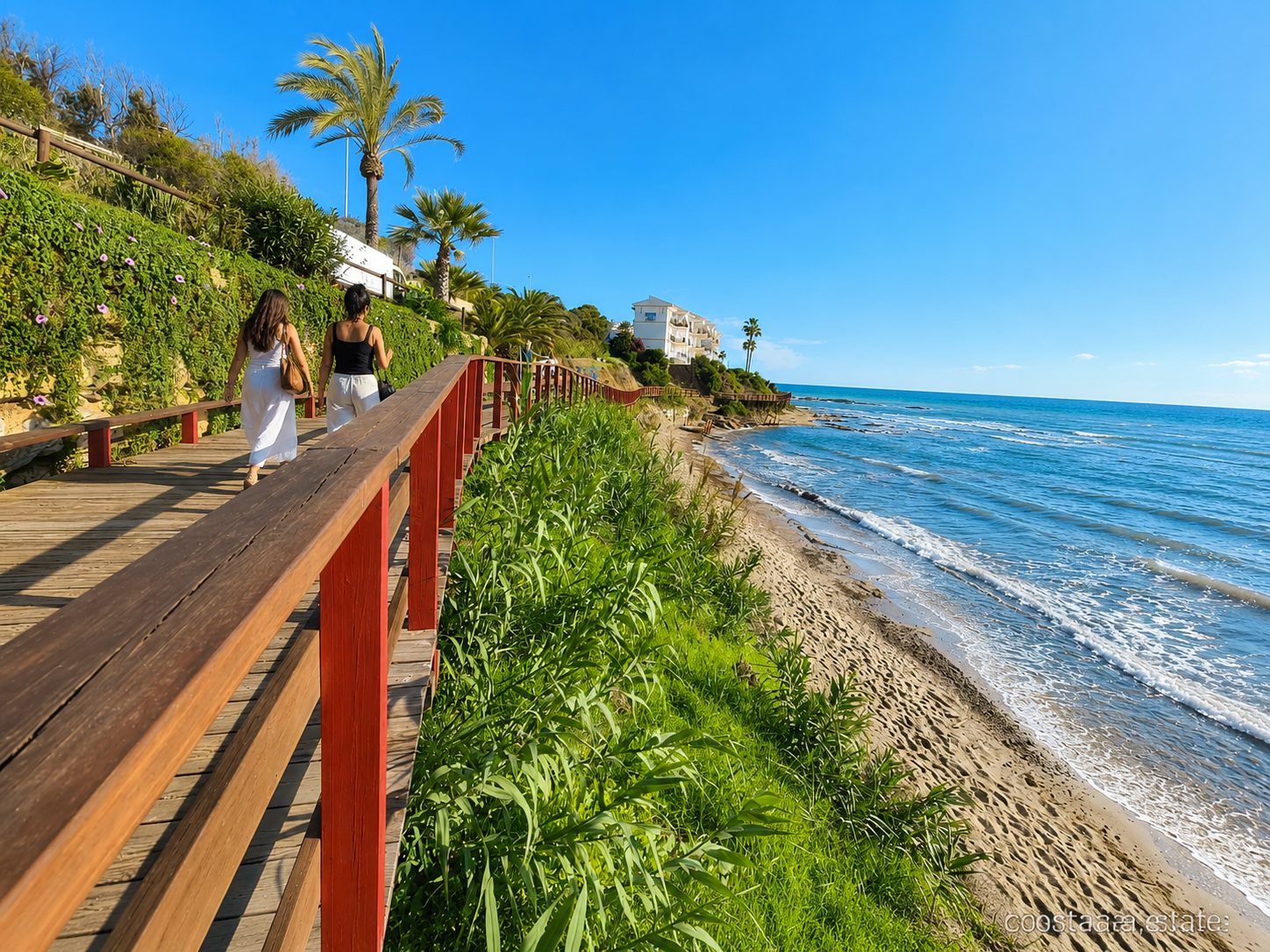
Golf here is an industry: La Cala Resort is Spain's largest golf complex — three courses in one valley — with Calanova, Santana and Mijas Golf alongside. Above the pueblo, trails climb into the Sierra de Mijas and bring you straight back down to coffee on the square. Below there are nine kilometres of chiringuito beaches, a promenade linking La Cala to Fuengirola, and the Mijas Costa racecourse, which runs Friday evenings in season. Malaga, for a concert or dinner, is forty minutes away.
Who it suits
Mijas suits buyers who want a new apartment with a pool — by the golf or ten minutes from the beach — without paying for a Marbella address. The same budget buys noticeably more space here, and usually more greenery. For investors it is mainly a holiday-let market: in La Cala the season genuinely runs April to October with high occupancy, because guests come back. Long-term rentals work less well than in Fuengirola, so if the plan is one tenant for twelve months, I tell clients honestly: it will be easier a kilometre up the road.
The city in frames
Developments in Mijas
21 new-build developments, prices from 207,000 €
Looking for a property in Mijas?
We’ll search the full new-build database in this area and prepare a selection for your goal and budget — with no fees or commission.
Nearby towns
City life on the beach, train to Malaga
The coast's capital and premium market
A marina, views and three towns in one
Editorial content — travel times and facilities are confirmed individually. Not advice.