Character
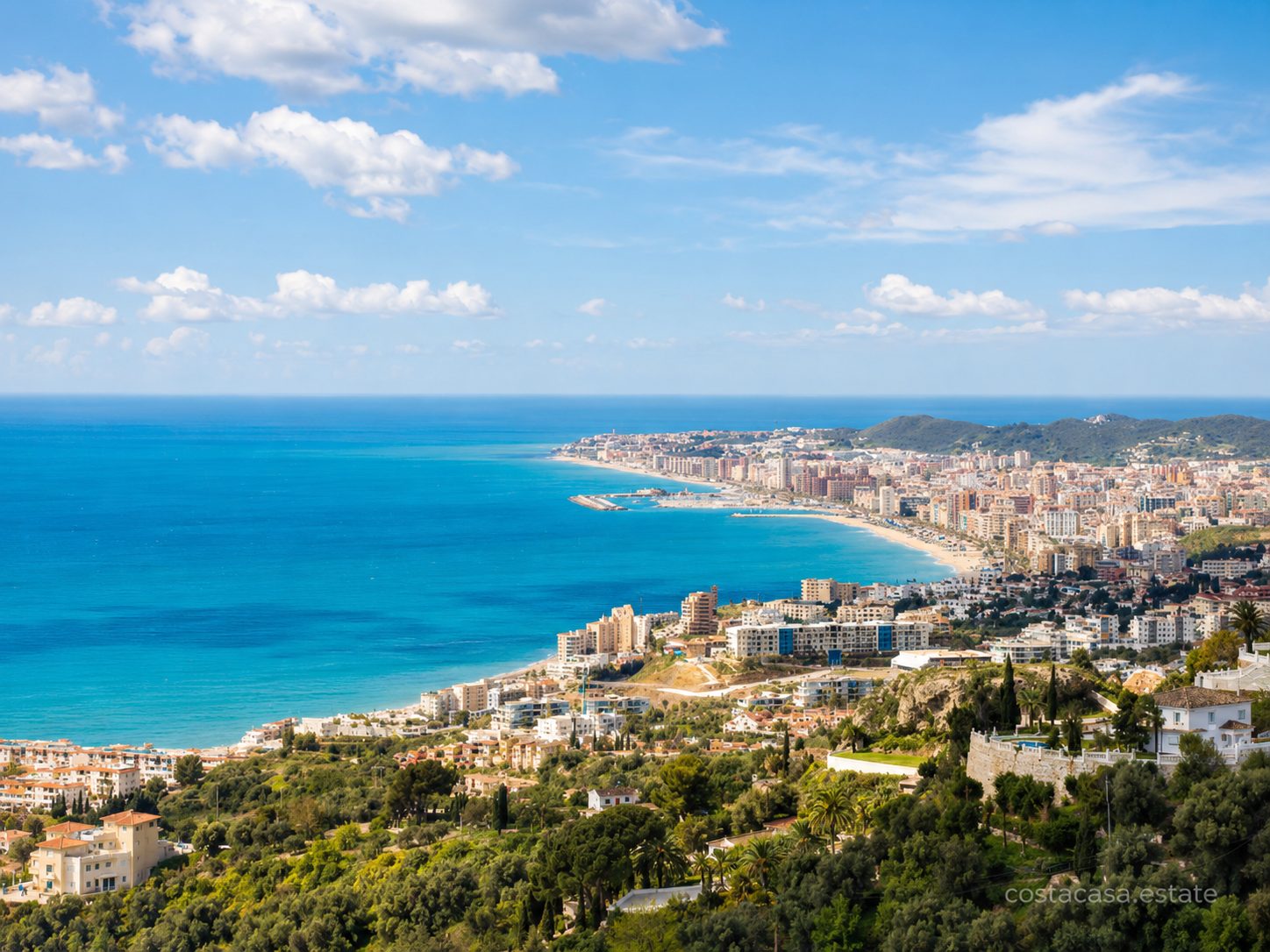
Fuengirola does not pretend to be a resort — it is an ordinary, dense Spanish city that happens to have seven kilometres of beach instead of a ring road. High-rises along the promenade, behind them blocks of shops, bars, clinics and schools, and all of it works as normally in February as in August. It holds one of the largest foreign communities on the coast, including a big Polish one: Polish shops, mass in Polish, a dentist who needs no interpreter. To clients who fear the coast dies in winter, I show Fuengirola on a Wednesday in January. That usually settles it.
Location and access
This is one of the few coastal towns where you can live without a car. The C-1 commuter train reaches the airport in twenty minutes and central Malaga in forty-five, running every twenty minutes until late. Marbella is half an hour by car, La Cala ten minutes. The price of that convenience is density: in season the coastal road and parking are genuinely difficult, which is why I ask clients about a garage before I ask about the view.
Everyday life
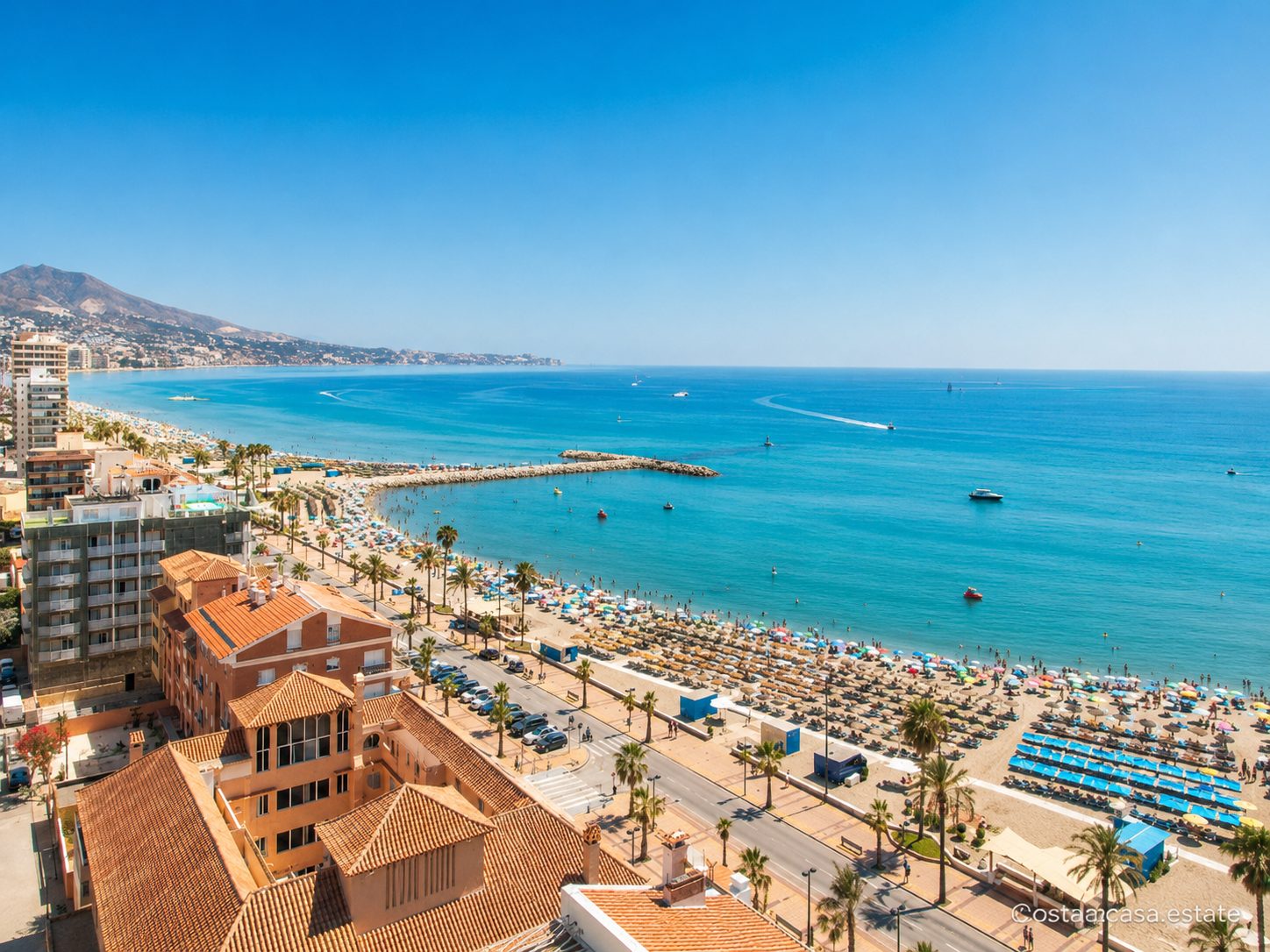
Everything is within walking distance — Tuesday and Saturday markets, supermarkets, pharmacies, gyms, schools, public offices — and the seven-kilometre promenade serves as the main street: runners in the morning, prams in the afternoon, half the city in the evening. Bar and shop prices are noticeably lower than Marbella's, and the range of services is urban rather than resort. It is also the easiest place to begin: English works everywhere, and the paperwork — NIE number, bank account, doctor — is all within a few blocks.
Schools and healthcare
Public schools are local, and beside them sit institutions that say a lot about the demographics: Finnish and Norwegian schools with their own curricula, plus British and IB options in Mijas and Marbella a quarter of an hour away. The private Quirónsalud hospital is in town, the public Costa del Sol ten minutes away by the motorway. Health centres, specialists and dentists come without queues and often in English. For families and retirees this is one of the logistically safest addresses on the coast.
Leisure
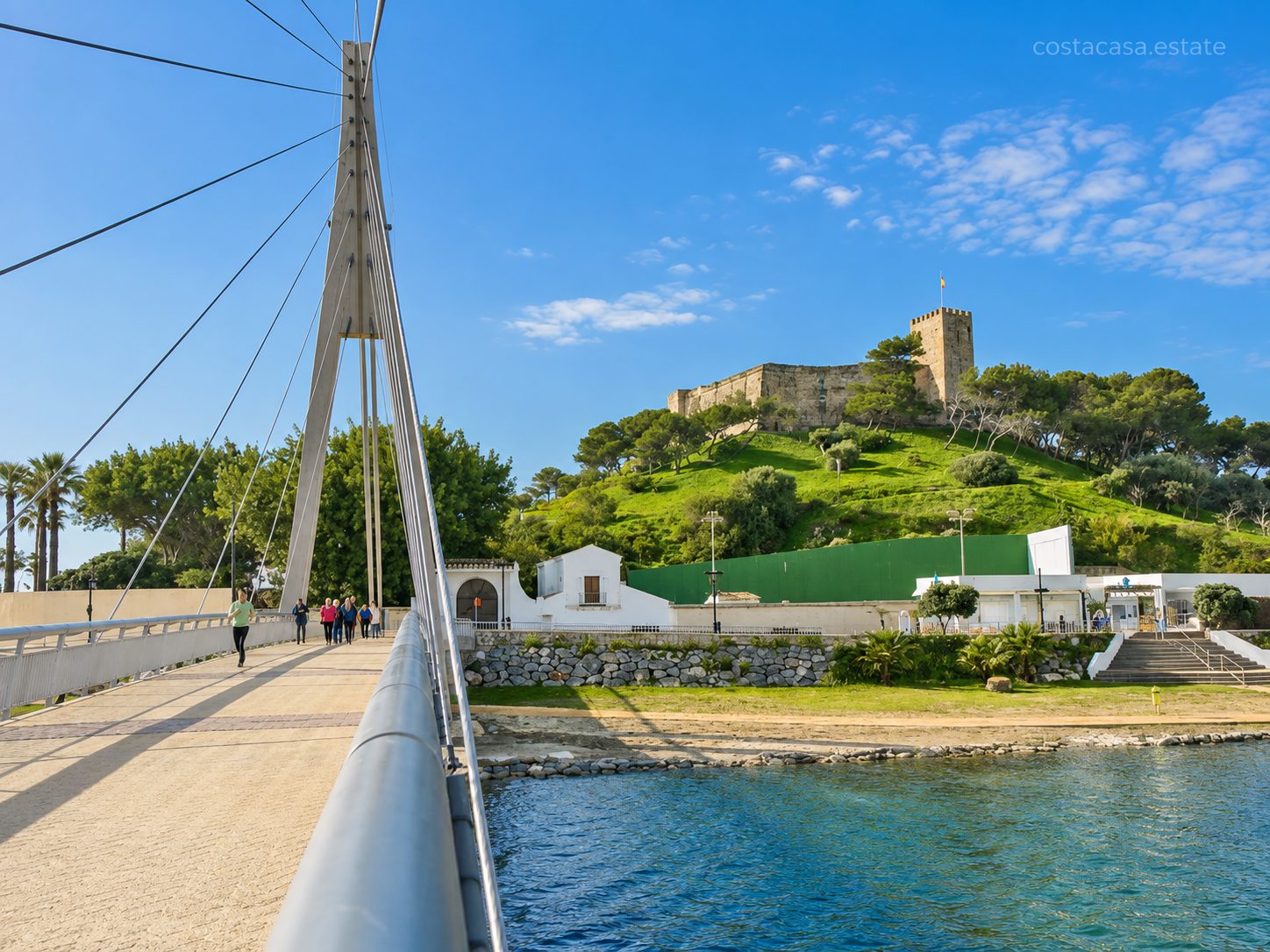
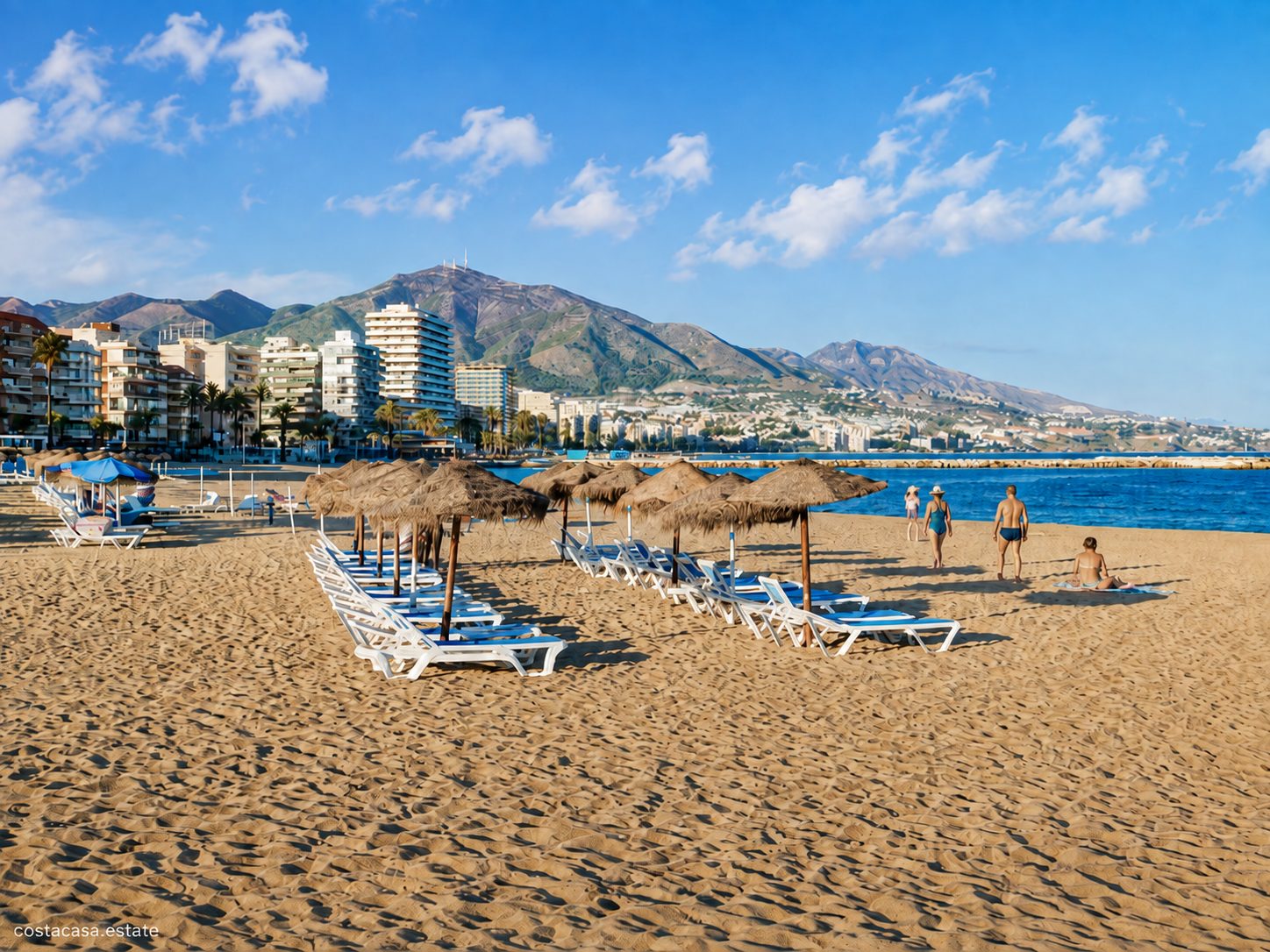
Beaches run the full length of the city, and above them stands Sohail castle, which hosts summer concerts under the stars — it sounds better than it photographs. Bioparc is one of Spain's more interesting zoos, designed without cages. Add the fishing port, the marina, a water park and the plainest urban pleasures: cinema, bowling, the market. At the weekend, all of Malaga's culture is one train ride away, with no parking to find.
Who it suits
Fuengirola suits two groups. First, buy-to-let investors: long-term rental demand is the strongest on the coast because the city lives all year and tenants — workers, families, northern European retirees — stay for years. Second, people relocating permanently who want everything at hand, car optional. What is missing? Quiet and a prestigious address — this is not a city for view villas. But if the numbers and everyday convenience matter, little on the coast performs better.
The city in frames
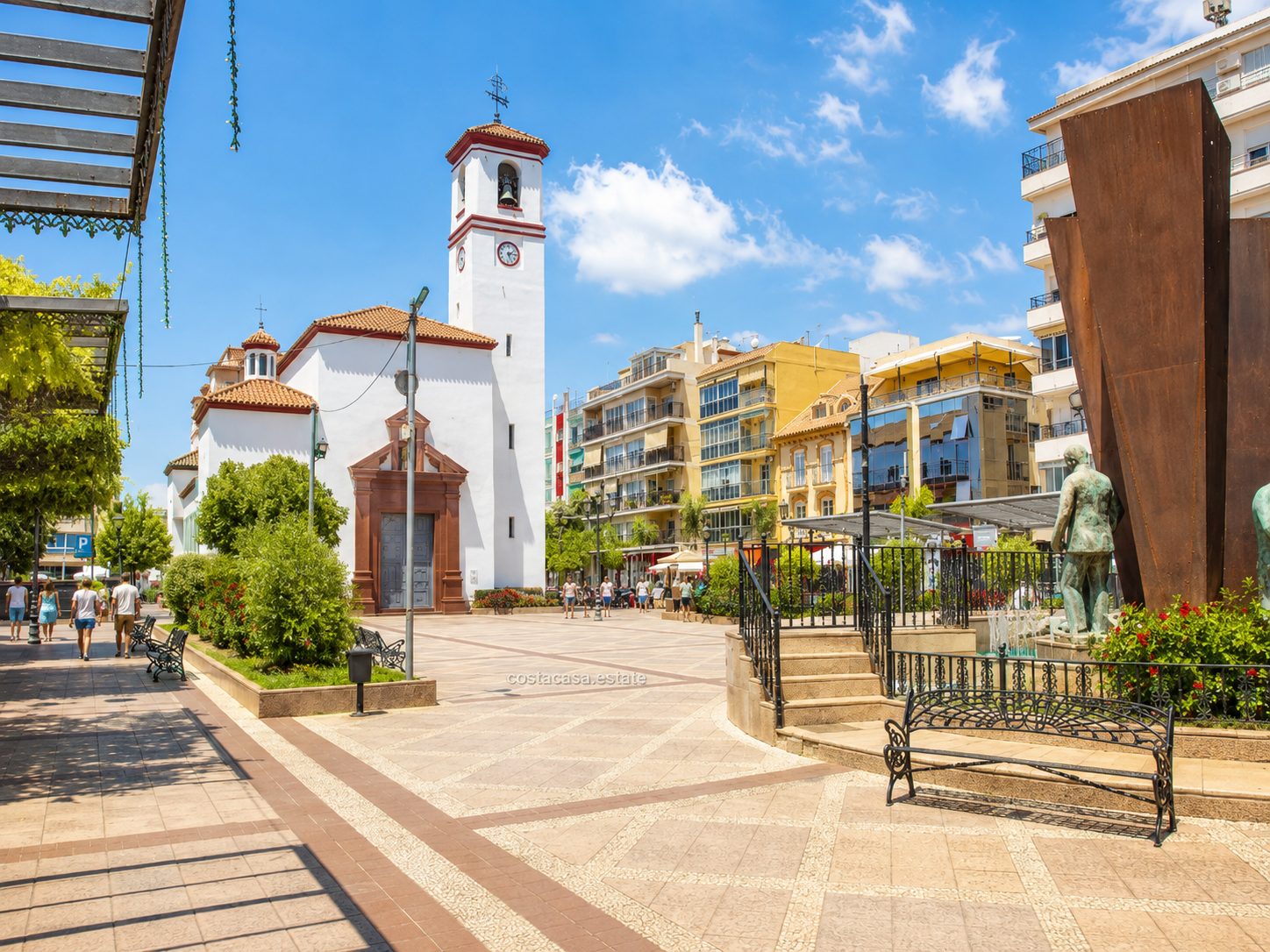
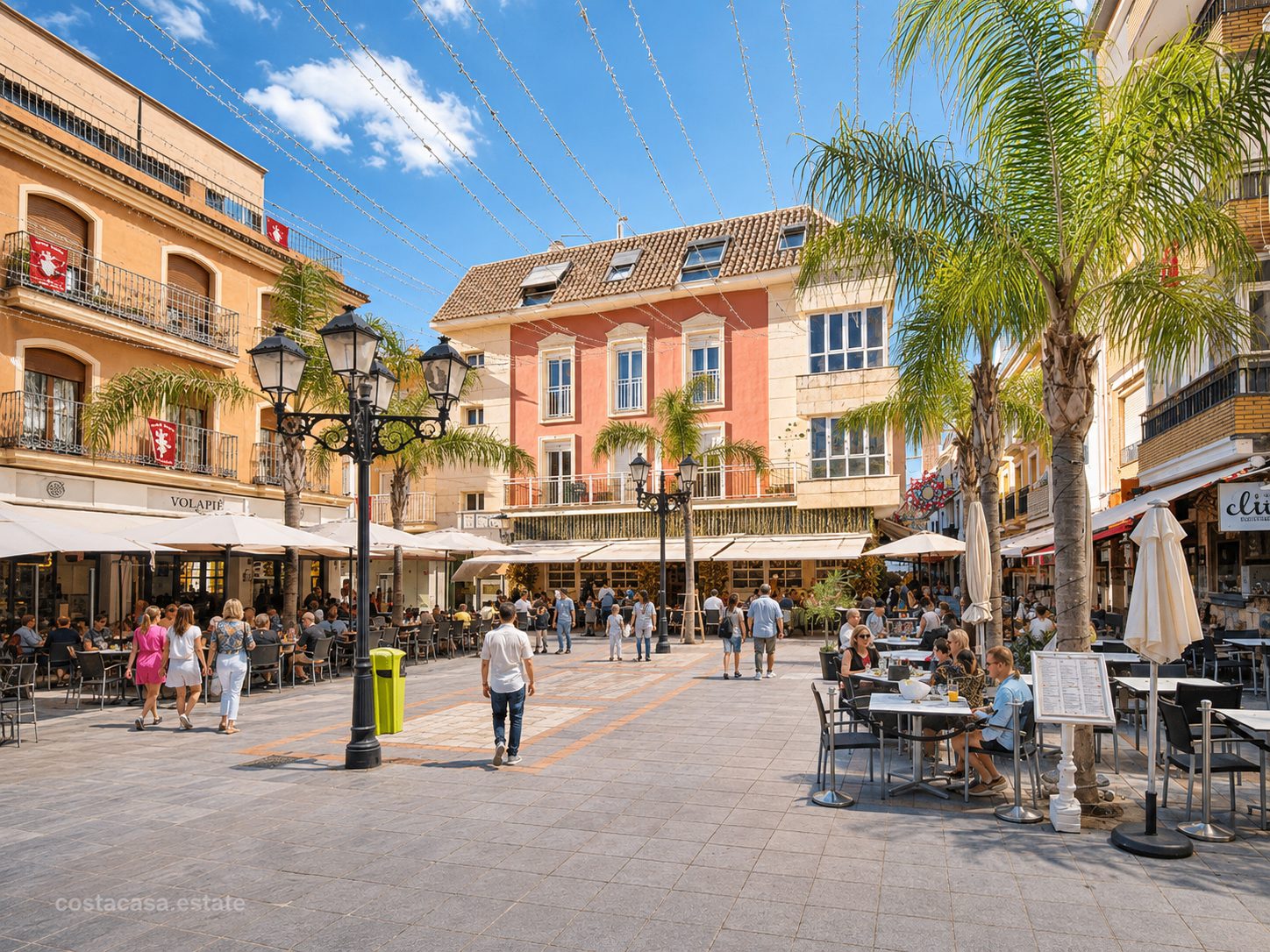
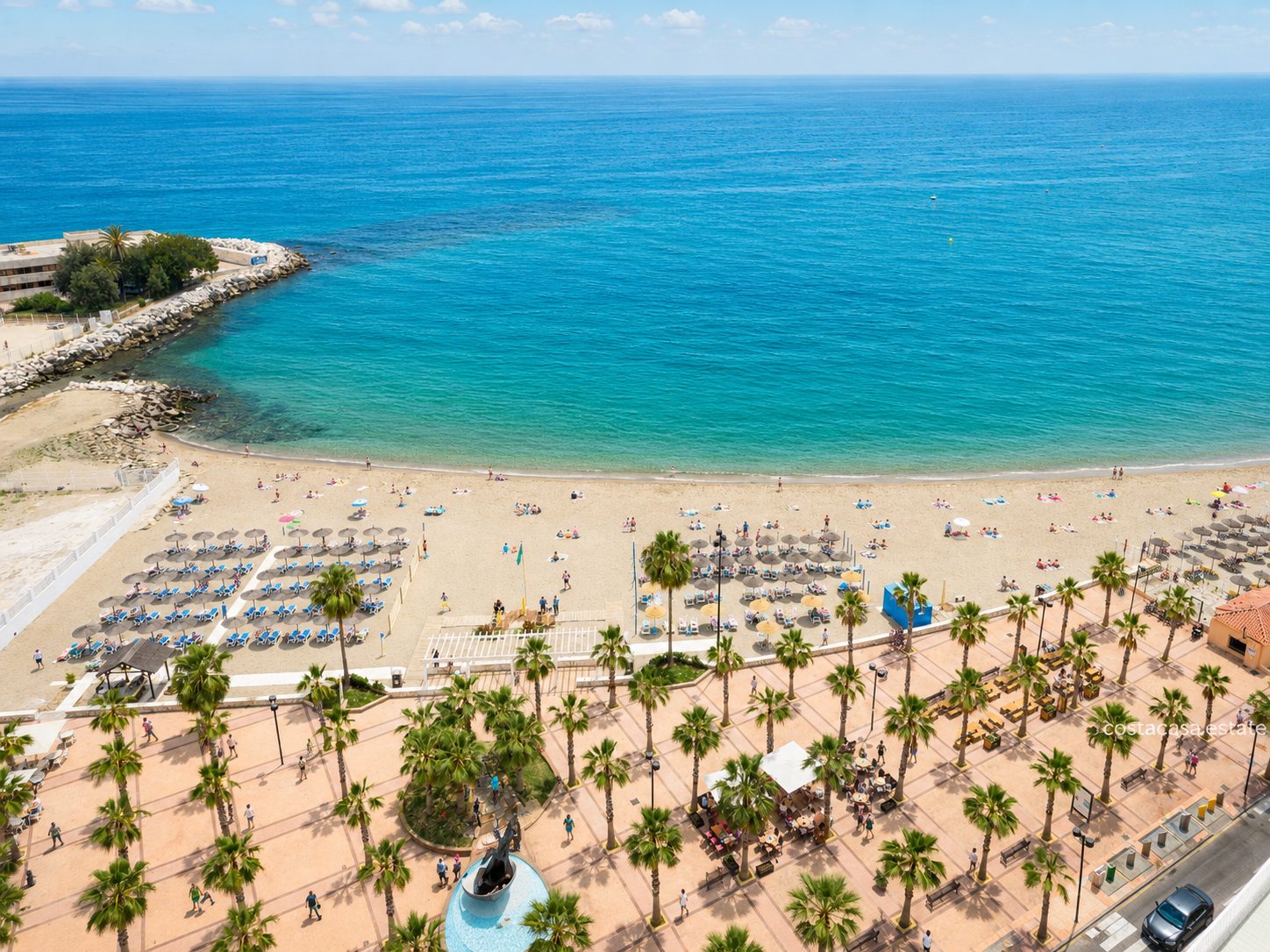
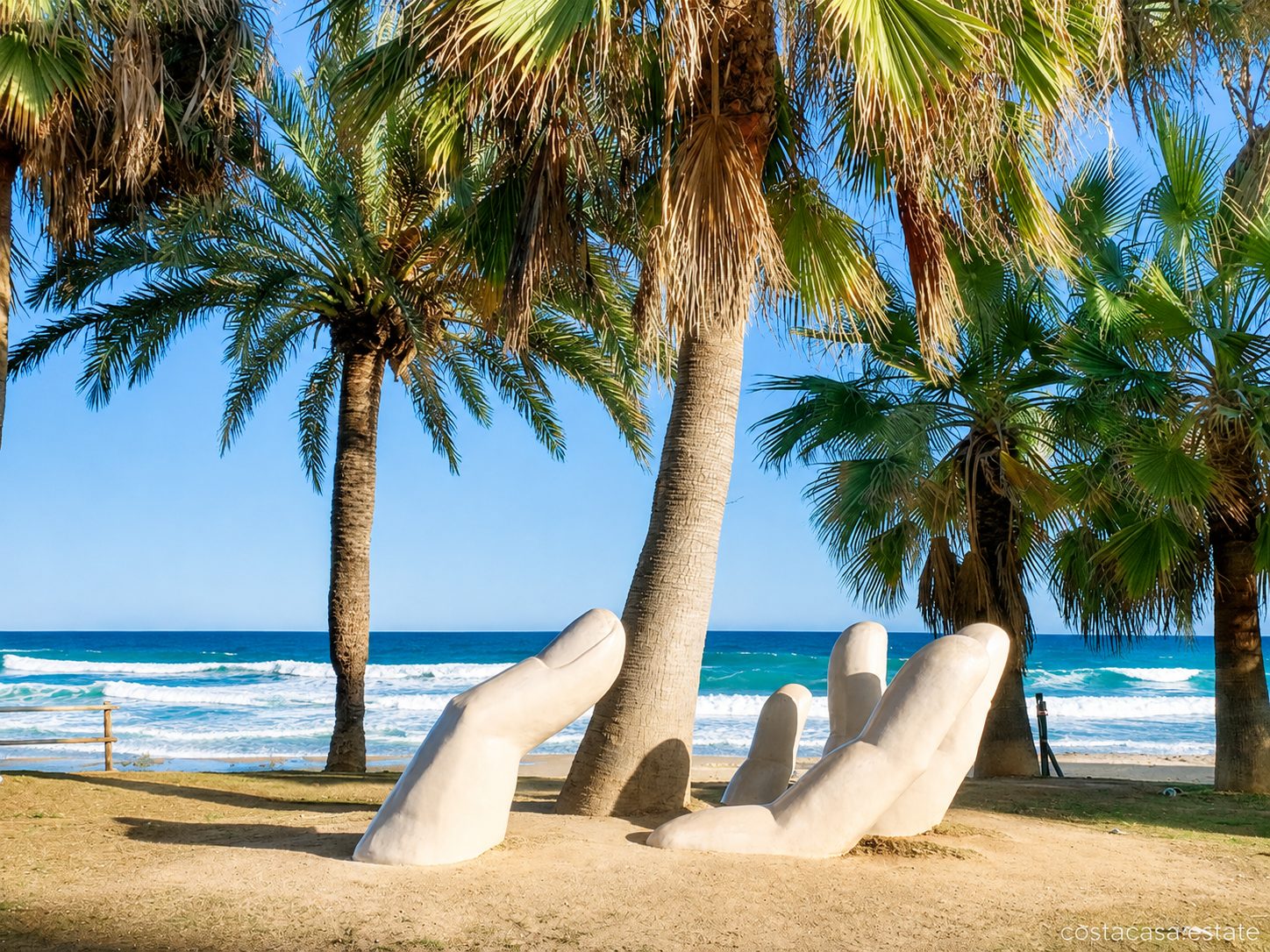
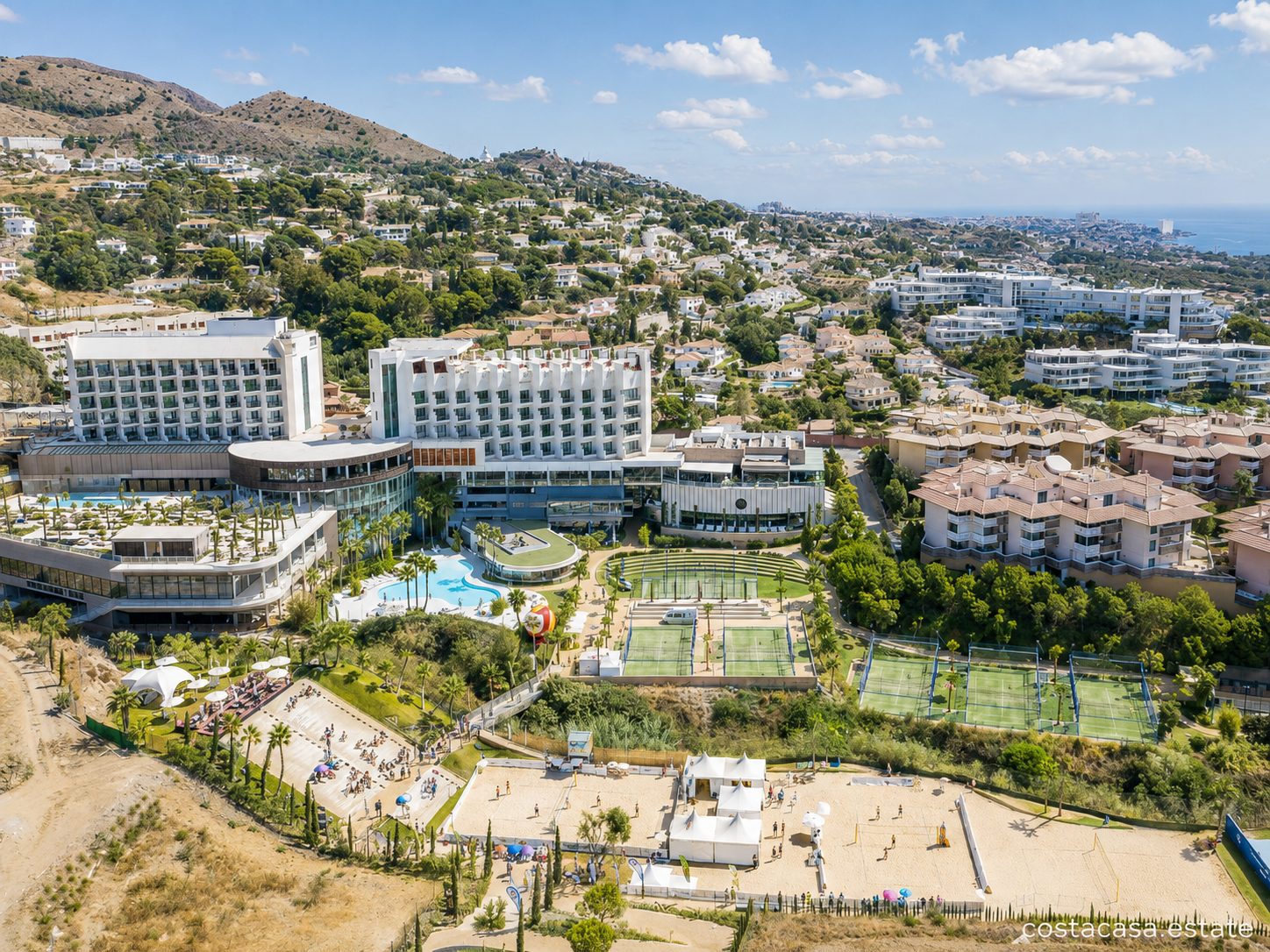
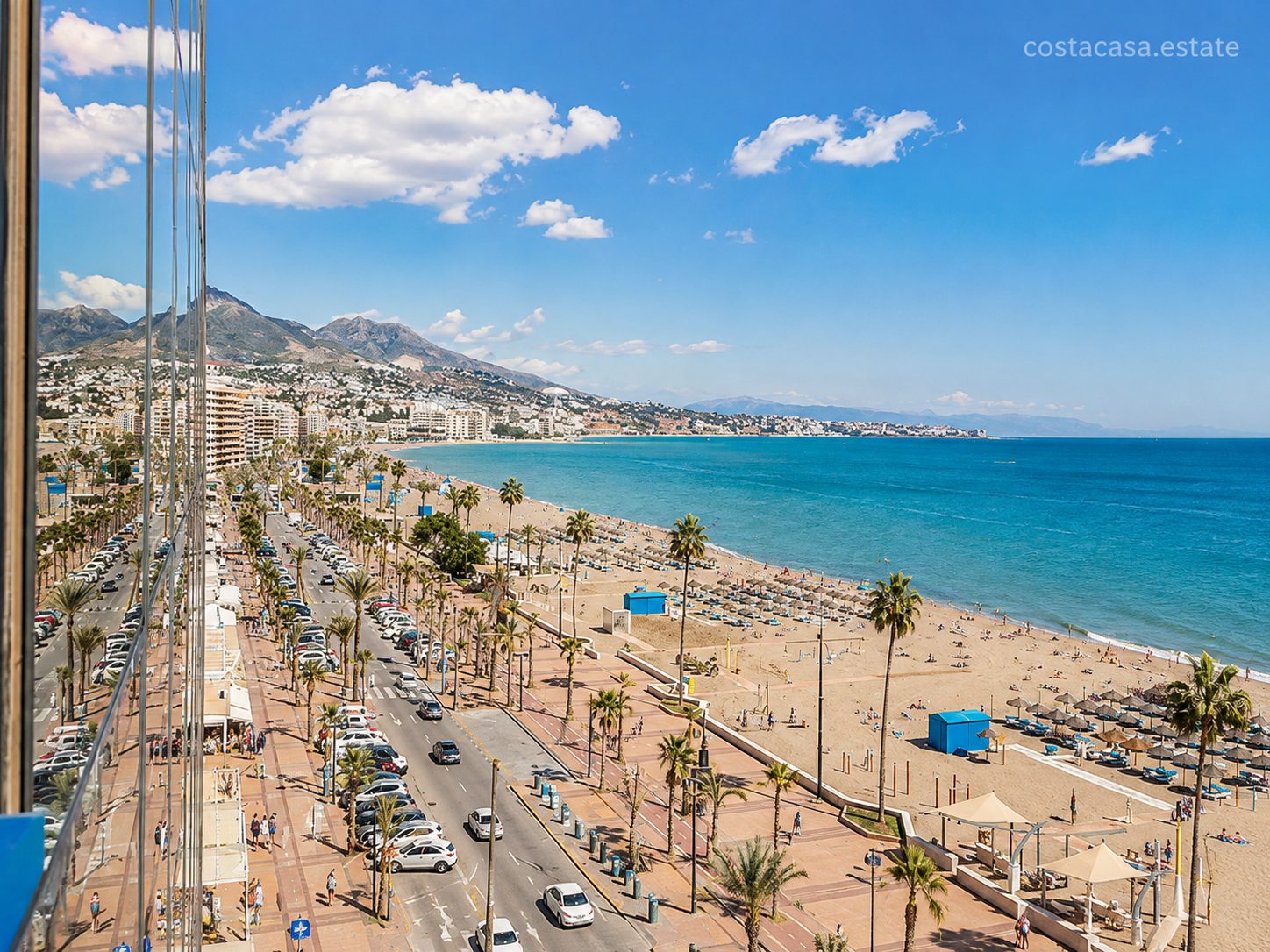
Developments in Fuengirola
9 new-build developments, prices from 249,000 €
Looking for a property in Fuengirola?
We’ll search the full new-build database in this area and prepare a selection for your goal and budget — with no fees or commission.
Nearby towns
White village and coastline in one
A marina, views and three towns in one
10 minutes from the airport, a year-round city
Editorial content — travel times and facilities are confirmed individually. Not advice.